I recently was was traveling past Twin Falls, ID and realized I had the opportunity to visit the Minidoka National Historic Site, located near Jerome and Twin Falls, ID. This is the location of the Minidoka War Relocation Center where 13,000 Japanese-Americans were imprisoned for three years during WWII.

Note: If you want to visit the Minidoka National Historic Site, don’t go to Minidoka, ID or Minidoka National Wildlife Refuge. That small town and the wildlife refuge are 50 miles east of the Minidoka National Historic Site. I made that mistake years ago.
History
Minidoka was not completed before the incarcerees started arriving, so the incarcerees were humiliated by having to work on finishing the construction of their own prison camp.

Additionally, barbed wire fences weren’t completed. Incarcerees were initially allowed to venture beyond the fences to collect firewood. But after the fences were completed they were no longer allowed, and furthermore the fence was electrified.
Up to nine people would were crammed into a one-bedroom apartment with cots and a pot-bellied stove. Because the camp was not finished in time, incarcerees had to use outdoor latrines for a much longer time than those at other so-called “camps.”
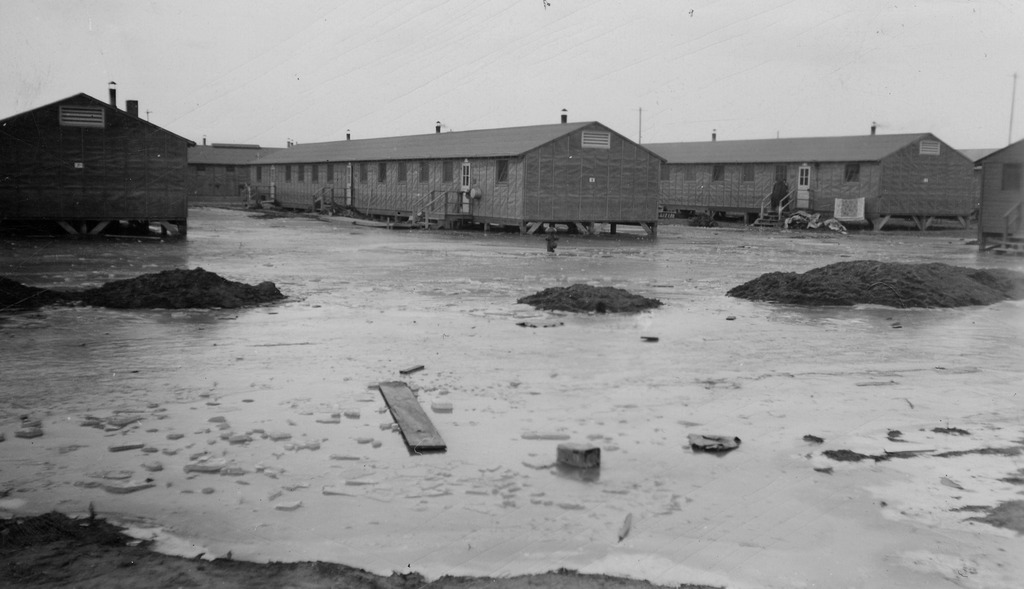
Conditions were harsh. Temperatures dropped to 21 degrees below zero (F) and up to 104, and winds stirred up fine volcanic ash into infamous dust storms.

Courtesy of Densho, excerpted from May Y. Namba Interview, Segment 17 (2004)
Idahoans, local media, and the governor railed against Japanese Americans and most stridently opposed plans to bring incarcerees into Idaho. Media tended to downplay or completely ignore the obvious civil rights violations against Japanese Americans while at the same time propagating the false narrative that Japanese Americans had committed espionage and assisted in the attack on the west coast (there were zero cases of sabotage or espionage committed by Japanese Americans during WWII).
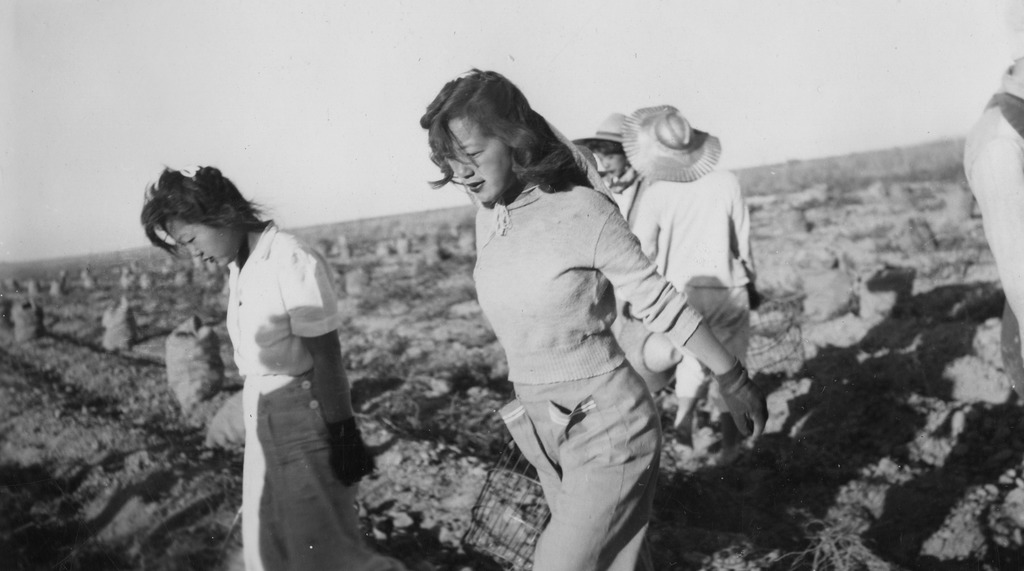
These anti-Japanese sentiments softened over time. Idaho farmers were desperate for workers since so many men had left to serve in the armed forces. Crops were about to be lost. Many repressed their prejudices as Nikkei were allowed to help with and ultimately save the harvest.
My Visit to Minidoka
Minidoka held people from Washington, Oregon, and Alaska. Although I know no family members who were imprisoned here, I do know of family friends who were. I had wanted to visit Minidoka for years and was happy finally to do so.

Although the visitors center was closed due to the pandemic, there was still much to see. A guard tower stands watch at the entrance of the site, as do the stone walls of the military police building and the reception/waiting area building.


You can observe remains of one of several impressive root cellars. It was about 200 feet long, 40 feet wide, and could store 50 railroad carloads of vegetables.


Next to the site flows a soothing river with a very unremarkable name: North Side Canal.


I definitely want to return to Minidoka when the visitors center is open. Minidoka is a mere 12 miles north of I-84. If your travels bring you anywhere near Twin Falls, ID, I highly recommend a visit.
 Blatant Calm
Pingback: Looking back over the last 18 months | Blatant Calm
Pingback: February 19, Day of Remembrance | Finding Ojiisan, Finding Myself