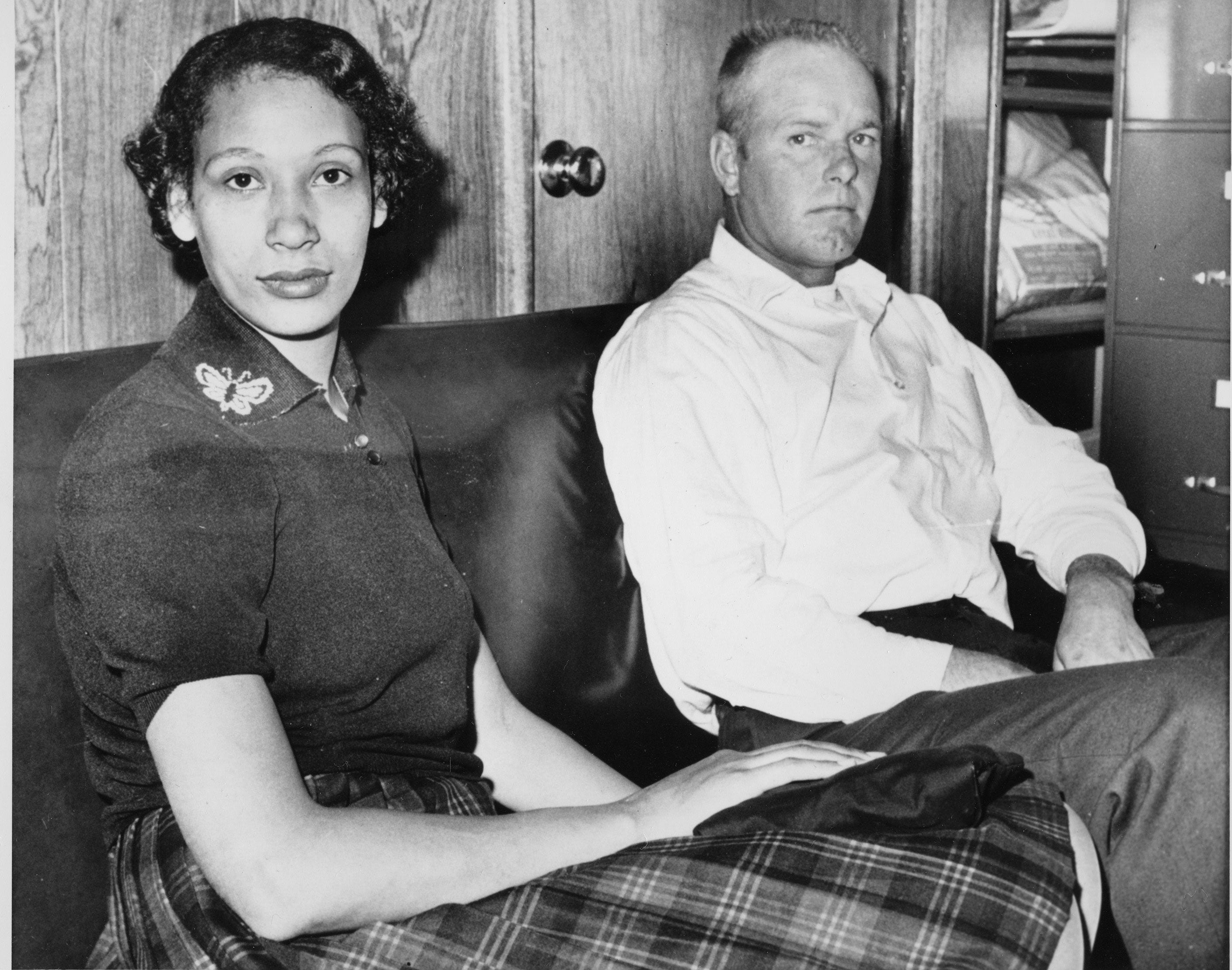
Today, June 12, is Loving Day. It remembers and honors the day the Supreme Court unanimously struck down state bans against interracial marriage in Loving v. Virginia.
Such laws are called “anti-miscegenation laws.” They typically defined miscegenation as a felony, criminalizing interracial marriage, officiating such ceremonies, cohabitation, and “fornication.”
Miscegenation comes from Latin miscere (to mix) and genus (type, family, or descent). The last anti-Miscegenation laws in the U.S. were overturned in 1967 by the Loving case.
Mildred and Richard Loving
The story of Mildred and Richard Loving is portrayed in the understated and moving film, “Loving” (2016, 89% Tomatometer) as well as the 2011 documentary “The Loving Story.”
My grandparents, married in 1911, here on their golden wedding anniversary
This was only one year before the Immigration Act of 1952 finally allowed immigrants, like my grandparents, to become naturalized citizens. By then they had lived lawfully and peacefully in Oregon for over 40 years.
My parents were married in 1958, just 7 years after it was legal in Oregon. One of my uncles, decorated for his service in WWII, was barred by law from marrying his wife in Oregon. They traveled to Washington state to get married. Washington banned whites from marrying Blacks or Native Americans until 1868 (the law was repealed prior to statehood).
My parents’ wedding in 1958
The pain of racism and persecution my mother experienced growing up and as a young adult was apparently still keen at the time of my parents’ wedding. We, her sons, learned in recent decades that my parents discussed whether to even have children. They were afraid of the bullying and persecution their “mixed” children might face. They decided to go ahead and ended up having three sons.
They also debated whether to give any of their sons Japanese names. My middle brother almost got one, but then they backed out. I got my mother’s family name as my middle name, and thus am the only one of their children to receive a Japanese name.
Things have changed significantly since 1967. Between 2008-2010, the number of newly-married couples of mixed race in Western states had increased to about 1 in 5 (22%). The percentages were 11% in the Midwest, 13% in the Northeast, and 14% in the South.
Happy Loving Day to you. Due to the pandemic and the protests around the country, I will be taking a quiet pause to think about the Loving family, the case and its legacy, and invite you to do the same.
The Newport Symphony of which I have been a member for over 15 years, has been posting videos of various musicians during this time of physical distancing. The most recent video features my friend and concertmaster, Casey, performing the achingly beautiful and sad second movement of Eugène Ysaÿe’s 2nd Violin Sonata, titled “Malinconia” followed by the upbeat and joyful Gigue from Bach’s Partita #3 in E, BWV 1006.
Deirdre Taylor was rescued from a NYC apartment fire 37 years ago when she was just 4 years old. The firefighter who saved her life was Eugene Pugliese.
I think it is fairly safe to say you have never heard a Trombone-Viola Duet. The very few exceptions would be some members of my family.
I arranged this for my Aunt Mika’s 90th birthday 6 years go.
Aunt Mika and my mom at my aunt’s 90th birthday party
My brother and I performed it, and that’s been the only public performance…until now. Although my aunt’s birthday is in August, I’ve been thinking about her and this piece and didn’t want to wait.
My brother, Ken and I at the first and, until now, only public performance of this work
I originally had no idea how it would sound, and I was pleasantly surprised by the musical combination. I figured, if one viola and trombone sound okay, two trombones and a viola should sound better, so I was happy to recruit another horn. I’ve also added photos of cherry blossoms I’ve taken in Japan and here in Portland.
I dedicate this to my Aunt Mika and to anyone celebrating their birthday during this crazy time.
“…shares stories of irrational decision making—from historical blunders to the kinds of everyday errors that could affect your future. Choiceology, an original podcast from Charles Schwab, explores the lessons of behavioral economics, exposing the psychological traps that lead to expensive mistakes.”
It may sound academic and dry. Admittedly, it does appeal to my degree in Psychology.
However, they take really interesting stories (the international space station, a Zamboni driver, Star Wars, professional gamblers, etc.) to illustrate various traits of human behavior and biases. Experts are interviewed to explain these in understandable terms.
Best of all, practical advice is give on how to avoid falling prey to these inherent human biases and irrational decisions. Fascinating and practical!
This song was stuck in my head when I woke up this morning.
My father and I performed a piano and violin arrangement of this song this decades ago in a hometown restaurant. It comes from a book of Fritz Kreisler arrangements.
Performing with my father circa 1986 in a Coos Bay restaurant – just realized he was 5 years older then than I am today
Here I am playing it on the viola instead of the violin. It has a lot of double-stops (playing two notes at the same time), which are difficult on most string instruments, but especially on the viola – an instrument notoriously difficult to play in tune.
Although I am big fan of and support the US Postal Service, I am not a fan of visiting the post office. Especially with Covid-19 concerns, I wish to avoid post office waiting lines.
super easy website to navigate (just enter your package dimensions, weight, address)
no monthly fees (I’m looking at you, Stamps dot com)
easy to compare different shipping methods to find the best rate (I’m looking at you, USPS.com – whoever designed your web interface should be severely punished)
low, corporate shipping rates
tracking numbers included
print out your shipping label on your home computer (your regular printer will do just fine)
just need a scale (a simple kitchen scale will do for many/most)
Even if you only need to ship one thing, it might take you less time to set up a new account and print out a label than it would to wait in line at the post office.
People who ship a lot may save a lot of money and time. You can opt to buy self-adhesive labels to put in your home printer, or consider upgrading to a dedicated label printer.
Do you have or are you considering running an eCommerce business? PirateShip.com integrates with many/most eCommerce solutions.
Want to see how much postage will cost via PirateShip.com? You don’t even have to create an account to check. Just enter your package info here: https://www.pirateship.com/rates
Does this seem like an advertisement? I don’t get any benefit from sharing this info other than the pleasure knowing I might have saved my friends some time and money.
The 1939 romantic British pop song, “A Nightingale Sang in Berkeley Square,” by Maschwitz and Sherwin has been performed by countless artists. I was first introduced to it by an a capella rendition on a Manhattan Transfer album.
A month or so ago, long-time family friend and bassist extraordinaire and founding member of the avant-garde jazz group, Oregon, Glen Moore, posted a video of Niels-Henning Ørsted Pedersen & Michel Petrucciani performing it.
The song got stuck in my head and so I reached out to friends of mine to record my transcription for string quartet.
Here it is:
The lyric, “The whole wide world…seemed upside-down…” takes on a much different tone today.
I love listening to podcasts, and especially now, during shelter-in-place and physical distancing (I prefer that term to “social distancing”), podcasts may be a great way to pass the time, learn something, or if you are having trouble going to sleep or are filled with difficult emotions, for relaxation.
What is a Podcast?
If you don’t know, a podcast is kind of like an internet radio show. You can listen to these audio shows whenever you want. You can pause and restart at any time. There are tons of podcasts on every topic you can think of, and you can subscribe to the ones you like.
They are organized by topic, free (some offer additional and/or ad-free content if you are willing to pay a little bit), and vary from shows from one individual talking about whatever they like to those from large companies and broadcasters (NPR, ESPN, etc.). Anyone can host their own podcast, and it takes very little gear and money to do so.
Most people listen to them on their smartphones. What you need is an app that lets you listen to and subscribe to podcasts. iPhone folks might use Apple Podcasts, Overcast, ListenApp, or many others. Android users might use Google Podcasts, Podkicker, etc. There are many cross-platform apps including Spotify, Pocket Casts (which I use), TuneIn Radio, and more. Here’s a list of apps.
Once you have an app installed, you can search for a particular podcast, or by a topic, listen and subscribe if you wish. Your phone can download shows automatically for you to listen on your own, in the car, whenever, even if you happen to be out of cell phone and WiFi range.
Don’t have a smartphone or don’t want to be bothered with yet another app? Most podcasts have websites you can visit and listen to shows. You give up the ease of subscribing to and auto downloading shows that you can take with you, though.
Toby’s favorite podcasts
What podcasts do I recommend? As I said, I listen to a lot of podcasts, and my mood changes from week to week and month to month. Here are some of my current favorites:
Well-Known and Popular Podcasts – these might be good for first-timer podcast listeners to check out: This American Life – one of the most popular podcasts out there. The Moth Podcast – live storytelling. Funny, fascinating, heartbreaking, never dull. RadioLab – a great podcast, a bit in the vein of This American Life, but more science/history; truly fascinating and entertaining Heavyweight – going back to a moment of regret; highly rated. I am warm/cold on it as I find the host both funny and grating at times
Science and Technology The Weirdest Thing I Learned This Week – three hosts share three separate really weird stories, then vote on the weirdest; fun and interesting Choiceology with Katy Milkman – Wharton prof Milkman explores stories of irrational decision-making and the science behind it Reply All – podcast about the internet. Wouldn’t seem interesting, but it is very!
Crime and Justice Criminal – fascinating podcast about crime, detection, and justice More Perfect – amazing podcast about the supreme court. Sounds boring, but it is fascinating! Sold In America – fascinating, heart-breaking 8-episode series about sexual slavery in America, and the unintended consequences of laws intended to protect victims Caught – Lives of juvenile justice – stories about kids getting into trouble and mass incarceration (pre-southern border wall family separation, etc.) The Clearing – April Balascio’s emotional journey from reporting her father and investigating allegations that he was a mass murderer Serial – seasons 1 and 3 (skip 2). Season 1 gripped a lot of the podcast nation with its long form story about a teen convicted of murdering his girlfriend. Ear Hustle – podcast made and recorded within San Quinten Prison about life in jail
History and Social Commentary Death, Sex, and Money – fascinating podcast about those three topics we are told we should “never discuss” You’re Wrong About – reviewing stories you thought you knew; kind of like “Adam Ruins Everything” Rumble with Michael Moore – Moore talks about current events and interviews interesting people UnErased – fascinating, heart-breaking series about the “pray the gay away” movement Uncivil – history podcast about the Civil War and how those stories connect to issues of race today. Way more interesting than it sounds. I especially cannot recommend more highly the last two episodes, “The Ring” and “The Fugitive” Remade in America – hosted by Bassem Youssef, aka Egypt’s “Jon Stewart.” Interesting, entertaining, and thoughtful discussion on race, identity, and being an outsider Rough Translation – how are stories, news, etc. discussed elsewhere in the world? Where Should We Begin? with Esther Perel – listen to actual therapy sessions hosted by couples therapist and author of “Mating in Captivity” Esther Perel Revisioninst History with Malcolmn Gladwell – long, fascinating journey through overlooked and misunderstood historical events/people
Misc. Song Exploder – musicians break down how they were inspired and created a song
Relaxation: 99% Invisible – honestly, I often listen to this to go to sleep since the host, Roman Mars has such a gentle, soothing voice. Slow Radio – probably not good for cooking or running, but for slowing down. 5-20 minute episodes that are gentle, relaxing recordings of nature, and gentle stories. I like it just before going to bed.
Years ago I wrote a parody which I performed for a Classical Revolution PDX when we regularly performed at The Waypost in NE Portland (hence the references to “The Waypost” in the song).
Here I am accompanied by bassist Rob Busey with whom I perform in the Newport Symphony. Thanks, Rob!





 Blatant Calm