Preparing for Thanksgiving week, I bought a bit too much food. One item was a loaf of delicious seeded multigrain whole wheat bread from Grand Central Bakery.
A delicious, but stale, hard loaf of bread
The loaf was untouched for several days and became predictably so hard it would have been difficult to slice. The interior no doubt now was also quite tough.
A professional chef friend told me that it is possible to rejuvenate a stale loaf of bread by running a water faucet all over the loaf and briefly baking it! I was skeptical, but what did I have to lose?
Note 1: Do not attempt this with moldy bread. If your bread has mold, compost or toss it.
Note 2: This works best with fully intact loaves of bread. But Bon Appetit says even if the interior of the bread gets wet, it still can be rejuvenated.
How to Rejuvenate Stale Bread
Step 1: Preheat your oven to 350 degrees F
Step 2: Hold the bread under running water. Completely soak the surface. Soak the bottom of the loaf more, since it is usually thicker and tougher. If the bread has been sliced, position the exposed portion of bread away from the faucet to minimize getting that part wet.
Beginning the rejuvenating shower
Soaking the bottom of the loaf
Step 3: Place the soaked bread loaf on the bare oven racks and set your timer for 10 minutes.
Step 4: Remove and inspect the loaf. If the loaf is large and/or still dry and hard, repeat the rinse and bake once more.
Step 5: Remove the loaf, slice, and enjoy!
The seeded whole wheat bread and the baguette were successfully rejuvenated!
You may need to adjust the temperature and length of baking time depending on the size and type of loaf you are rejuvenating. Just keep an eye on the bread while it is in the oven. You will be surprised how well this can work!
Update: I was able to successfully rejuvenate a baguette as well! Also, I attempted re-rejuvenating a loaf that had been sliced, and it worked as well!
Summary: A story of unexpected connection and history borne out of a selfless act
A year ago this month a friend was visiting from out of state and booked a cute AirBnB in the neighborhood. Surrounded by a garden of flowers and herbs, the quaint cottage was cozy, well appointed, and included a fire stove.
Fire stove similar to the one at the AirBnB
The fire stove door had a detachable wooden handle. You connected the handle to the door when you needed to open or close the door, and removed it to prevent it from getting too hot.
The handle had seen better days. Bite marks, probably from an enthusiastic pooch, pockmarked the wood, and one side was singed black. Worst of all, nearly half of the handle had cracked off and was completely missing.
The house was lovely and the AirBnB host kind and helpful. I thought it would be a nice gesture to see if I could repair or replace the stove handle.
I knew of a woodworking store in the area and I thought, maybe they have wood handles ready to buy to easily replace this broken one.
I took the handle to the store, and a kind gentlemen working there took a look at it. No, they did not sell any ready-made replacement handles that would work.
I suggested that anyone with a lathe and basic wood turning skills could probably whip one out in less than an hour. Did anyone in the store offer such services? Not usually, he answered, but said he’d be willing to do it himself. He thought the job would take a day or two and suggested — in my opinion — a too low price for the job. We shook hands to seal the bargain.
He began carefully taking measurements of the handle and writing them down on a sheet of paper. Then he asked me for my name and contact information.
“Toby Loftus,” I answered, and gave him my phone and email address.
“Loftus,” he repeated, spelling it out. “You know, my sister took piano lessons from a Loftus when she was a child…”.
“Where, and in what decade?” I asked.
“This would have been in Eugene during the ’60s,” he responded.
“That had to be my dad, Don Loftus!” I answered. “Although Dad passed away over 20 years ago, Mom is living in Ashland, and I’ll bet she remembers her!”
“Ashland?” he responded with equal surprise. “My sister lives in Ashland and still plays piano today!”
With the woodturner
Indeed, not only did mom remember his sister as a piano student of my late father, but she remembered their father, too. She recalled him being owner of a wood working or furniture business in Eugene.
A few days later I returned to the woodworking store to pick up the new stove handle. It looked beautiful, perfectly proportioned and fitting comfortably in the hand, stained a deep walnut hue, and shiny with a fresh coat of clear lacquer. I couldn’t have been more pleased.
Pleased, too, was the AirBnB host, once she saw the new handle. She couldn’t believe I had it done and was so grateful.
The satisfaction replacing the burnt and broken handle was far outweighed by the delight the wood turner, his sister, and my mother experienced at the unexpected reconnection.
I don’t believe one should commit selfless acts and expect additional rewards — that rather defeats the whole purpose. Whether it is fate, karma, or mere coincidence, I do not know, but it seems like selfless acts beget more selfless acts and unexpected joys.
Regardless, there is no shortage of opportunity to, or need for acts of kindness and generosity.
Update September 2023: I bought a second typewriter. Here’s a video I made about it: https://youtu.be/4rZr3bs82uM
Last weekend I used a manual typewriter for the first time in my life — and was hooked.
Sitting at an Olympia typewriter with gold leaf highlights receiving tips from store owner, Tony Valoppi
I learned to type on an IBM Selectric electric typewriter. I hated the class, but in one semester learned touch typing, a valuable skill that served me well through high school, college, and to the present. Only a couple years after my initial typing lesson, all typewriters were removed and replaced with computers and keyboards. Typing classes were renamed, “keyboarding classes.”
IBM Selectric II electric typewriter like the one I learned to type on — you won’t find this or any electric typewriter at Type Space.
Beyond my semester of typing class, my exposure to typewriters was limited to an Adler brand manual typewriter in the home where I grew up. My mom typed the initial manuscript of her book on it, but I never used it.
A high school classmate told me about this store a couple weeks ago. The way she and her father lit up describing the different typewriters captured my imagination and I decided I had to go see it myself. The store is owned by her partner.
Sure enough, last weekend I visited Type Space, a SE Portland business that is manual typewriter showroom, museum, repair shop, and writer’s space rolled into one.
Type Space, 2409 SE 49th St, Portland, OR 97206
Located at SE 49th and Division, Type Space is open Thursday – Monday, 11am – 6pm. People are welcome to come in, look at the vast array of typewriters, and sit down and try them. The typewriters are very affordably priced should you decide you must have one (like I unexpectedly did).
I was doubtful I could type accustomed as I am to easy to press, fast, and tightly clustered keys of a computer keyboard. But with just a few pointers from the owner, Anthony “Tony” Valoppi, I was off and running.
I started with a German typewriter. The Z and Y keys swapped, which initially threw me off. Additional keys provided the German vowels with umlauts (ä, ö, ü) and the sharp S, “Eszett,” β.
I then moved to a sleek, portable typewriter. At the owner’s invitation, I typed a letter, addressed the envelope on the typewriter, and was provided a stamp. The postal carrier dropped by within the hour and my letter was off on its way.
I spent three hours at Type Space and those hours flew by! I got to see a variety of old and new typewriters, including a Russian typewriter with Cyrillic keys, a Hungarian typewriter, and a Japanese typewriter.
The Japanese typewriter had a grid with over 1900 kanji characters, numbers, letters, and symbols. Using a stylus, you choose the desired character and press a lever, typing one character at a time.
Nippon Type Panwriter Japanese typewriter
Everything in the showroom is available to take down, place on the common table and try out. This is a museum with manual typewriters dating back over a century, but one in which you are invited to touch and try out everything!
A selection of scores of typewriters available to try and to purchase
Valoppi, a professional chef, opened Type Space early in the pandemic. The idea seemed crazy to many, but his business has taken off. It has been featured on a couple local TV broadcasts:
While I was there, a steady stream of customers came in, picking up recently serviced and tuned-up typewriters, dropping in to browse and try out various models, or bringing in a typewriter for service or just to learn how it worked.
Smith Premier typewriters with separate upper- and lower-case keys. The #4 on the right dates from 1906.
Personally, I came to see the beautiful variety of typewriters, learn about their various designs and mechanisms, and maybe try my hand at a little manual typing. I didn’t expect to enjoy the latter so much!
The Typewriter Mystique
There is something magical and visceral about a typewriter that is lost on a computer keyboard. With computers, deleting a word or phrase or rearranging whole sentences and paragraphs is effortless.
With typewriters, more thought and determination is put into each word choice and turn of phrase. No spellchecker will immediately flag your mistakes — you are left to leave them be or correct them and leave unmistakable artifacts of the evolution of your work.
Varying levels of speed, confidence, and finger strength result in uneven darkness between letters and words. These variances transmit clues to the writer’s emotion and intention invisible on the laser-printed page.
Oliver Typewriter
The spaces inside letters may not be completely clear. Shadows inside an “a” or “o” instill texture, depth, and color to typed letters.
There is also the aural and tactile experience — the satisfying “snap” as each letter strikes the page, the “ding” of the margin warning bell, and the pleasing ratchet and metallic skid of the carriage sliding down its track to make way for a new line of text. These sounds and the physical feedback through the fingers and hands makes typing a much more sensory-rich experience.
I expected to be delighted by what I saw and learned, but I did not expect to be captivated by the typewriters. But I was. I fully plan to pick out and purchase a manual typewriter from Type Space soon.
Whether you are a writer, an avid reader, are into museums, are intrigued by mechanical gadgets, whatever, I highly recommend you pay Type Space a visit. I am pretty sure you will be delighted — and you might get hooked too!
In order to vote in the November 8, 2022 general election, you must be registered to Vote.
You should register or update your registration if you move, change your name, or want to change your party affiliation. I don’t know for certain, but I assume for most states you can also request absentee ballots in this manner (definitely true for Oregon).
If you are not yet 18, but will turn 18 by election day, definitely register! You will receive your ballot either on or after your birthday, or when the election occurs.
In Oregon, the last day to register is October 18, 2022, and it’s really easy to do online.
I’ve always wanted to be a good friend to the people I care about — to offer a kind, non-judgmental ear, lend a hand and strong back with physical tasks, to cheer on a friend’s success and to share in their sorrows. Hopefully you have a friend who is there for you, and I hope you offer support to those you care about.
But these acts of friendship can sometimes go awry. Different people have different needs and determining those needs and providing them can be a challenge.
Countless letters to advice columns, personal experiences, and jokes attest to the difficulty people experience when they need the comfort and support of their friends and partners. These challenges are backed up by scientific research.
I vividly remember reading You Just Don’t Understand – Women and Men in Conversation 30 years ago by linguist Dr. Deborah Tannen and her message about how different sexes use language in different ways. In particular, I recall examples where women and men would become frustrated with each other when one was discussing a problem or complaint. In some cases, men would hear women’s complaints and want to solve the problem rather than just listen. Amongst themselves, one man would express a complaint and others would completely change the subject or make a joke of it, rather than commiserating and empathizing.
More recent research, discussion, and cultural awareness and sensitivity may make Dr. Tannen’s work seem pedestrian today. But I believe her overall message remains valid: different people communicate differently and have different needs when they are hurting.
In my own life, I could see how different friends coped with stress and worry in different ways. Some needed to vent. Some needed to do something physical. Some wanted to avoid the stressor completely. Some just wanted a hug. I had inconsistent success guessing what they needed and providing it.
Over time, I’ve developed SDAC (which I pronounce, “ESS-dack”). I’m certain others have figured out something similar, but here’s my strategy. When I sense a friend is in distress, I offer them SDAC. Unless I’ve talked about it before, they have no idea what I am talking about. Here’s what I mean: I offer them Silence, Distraction, Advice, and/or Comfort.
Silence means I will listen silently, without interruption, offer no feedback, no judgment, just listen and let them vent their frustrations, articulate their grievances, exorcize their demons. It may require discipline not to finish a sentence, correct a word, interject “yes, but…,” or offer solutions. But some people just need to give words to what they are feeling and the space to do so without any response.
“The word ‘listen’ contains the same letters as the word ‘silent’.”
― Alfred Brendel
Some people want Distraction. They have been engulfed by their fears, sadness, and/or anger and need to be pulled out for a while. In such cases, I may give the account of my day, tell a funny story, read a poem, sing or play a song, etc. Sometimes disrupting the spiral of darkness allows the person to step outside of themselves for a moment and experience some relief.
Advice should only be given when truly asked for. Numerous women I know have been frustrated and angered by men (including me) who offer advice and solutions after hearing their current complaint. People can feel patronized, demeaned, and not heard when the first response they get is a solution rather than empathy.
Many people, especially men, may feel uncomfortable with negative emotions and gravitate to problem-solving mode, which is a safe and comfortable place for them. But that may be the opposite of what the person needs in that moment.
When offering advice, I find it helpful to offer it and finish with the comment that there is no obligation or expectation the other person actually follow the advice. My typical joke is, “take this with a grain of salt lick.” The person shouldn’t feel pressure or judgement based on whether they agree with and follow your advice.
“Advice is like snow – the softer it falls, the longer it dwells upon, and the deeper it sinks into the mind.”
—Samuel Taylor Coleridge
Some people don’t want to talk about, be distracted from, or advised on whatever their current stressor is. They may need Comfort. If you are together, that could be a long hug. If you are physically separated, it could be to be reminded why they are your friend and why you think they are special. Bad things happen to good people. Reminding someone that just because they didn’t get the job, their child is faltering, or whatever, doesn’t mean they, themselves, are bad or damaged. You still are their friend, and you still love them.
I truly believe we don’t tell others frequently enough how we feel about them. Being reminded of that can be a huge comfort.
Offering SDAC helps me know what my friends need, but it also may help the person in distress.
Often, when we are in a state of crisis, we don’t know what we need. We are consumed in the vortex of feelings we are feeling. When offered SDAC, sincerely and without judgment, we are invited to stop for a moment and seriously consider what would help us, what would make us feel better in that moment. That alone can be both empowering and calming. Even if the person offering SDAC isn’t great at delivering it, creating a space for the stressed person to figure out what she/he/they need can be an act of great kindness in itself.
Most everyone with whom I have shared the concept of SDAC has found it helpful. But it takes practice — I still falter at times and provide the wrong response to friends under stress before remembering to offer SDAC.
Please consider giving SDAC a try. I suspect you may find it helpful, whether you want to offer kindness and support to a friend in need, or you are the person needing it.
It was a last-minute decision. We only decided last night around 9pm.
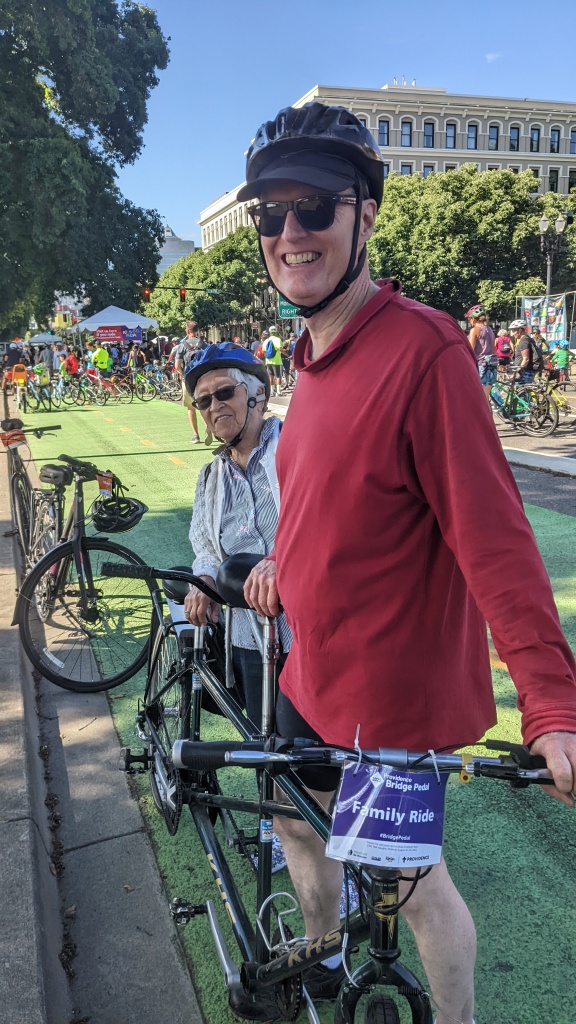
Mom, Lynn, and me at the summit of the Fremont Bridge
She occasionally rides with her friend Lynn, who owns a tandem bike. He first invited her to ride with him about five years ago. At the time, he thought she was maybe 70. When she told him she was 85 years old, he was taken aback.
She was a late starter, having learned to ride a bike around 12, and she hadn’t ridden one in many, many decades.
They have enjoyed several tandem rides since that initial invitation. They had planned to ride in Corvallis today, but last night, Lynn realized the Bridge Pedal was today. He reached out to me and suggested we do it. If Mom was game — which I was certain she would be — I would enthusiastically join them. Mom was reached, and we quickly agreed to do it.
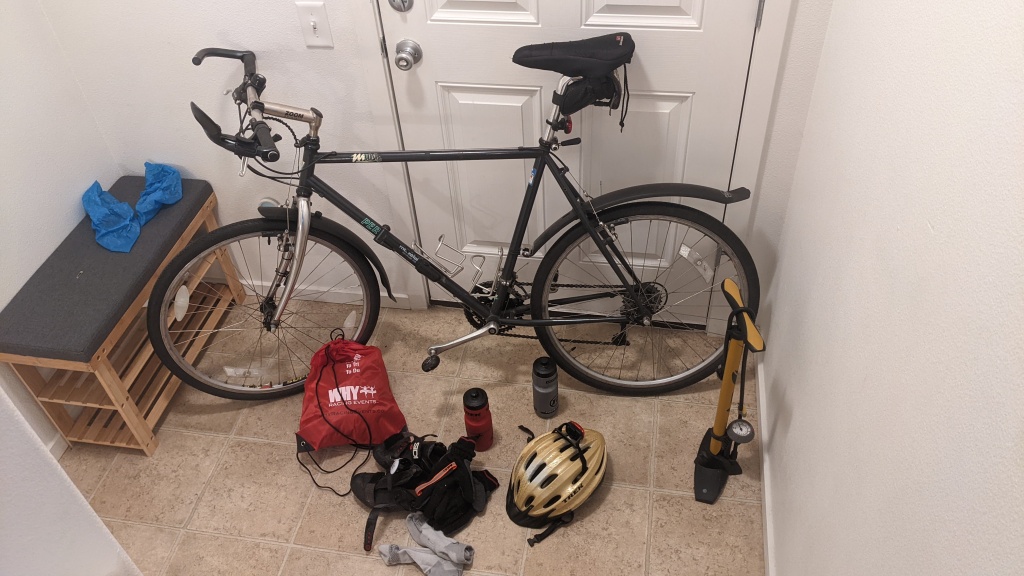
So there was a mad scramble as I had to register quickly online as well as get my bike and gear together and ready. I haven’t ridden my bike in years and recently moved, so it took some doing.
I woke early, gobbled a little breakfast, and headed out to the nearest MAX station to ride downtown to meet them.
That’s when I realized a grave error. I had pumped up my tires, checked my brakes, replaced the dead batteries in my warning lights, but hadn’t checked my gears. They weren’t working.
Apparently, my old Shimano Deore XTR Rapid Fire shifters (I’ve never liked grip shifters) were gummed up and need to be cleaned and lubricated. But there was no time. I faced the prospect of doing the entire ride in one gear.
Fine, I thought to myself. Fortunately, it was stuck in a decent gear: I could start, and the gear was high enough to allow me to cruise. I didn’t expect the pace to be too aggressive, so I let it go and started riding.
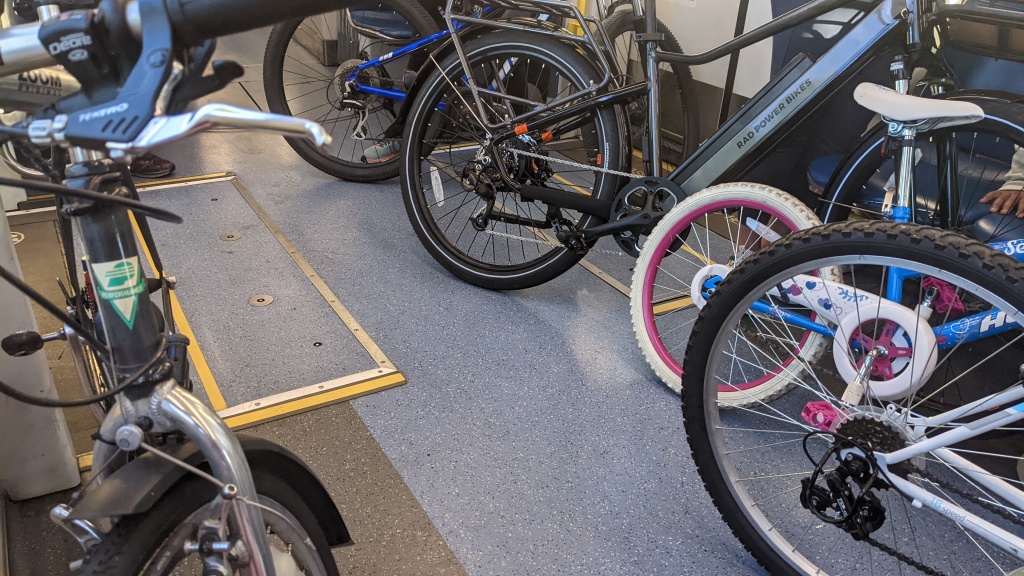
Bikes packing into the MAX light rail car
Even as early as I boarded the MAX and at a relatively distant station, there were already at least five cyclists on board. A family of five soon added to our numbers. It made me happy to see so many cyclists and of such varying ages.
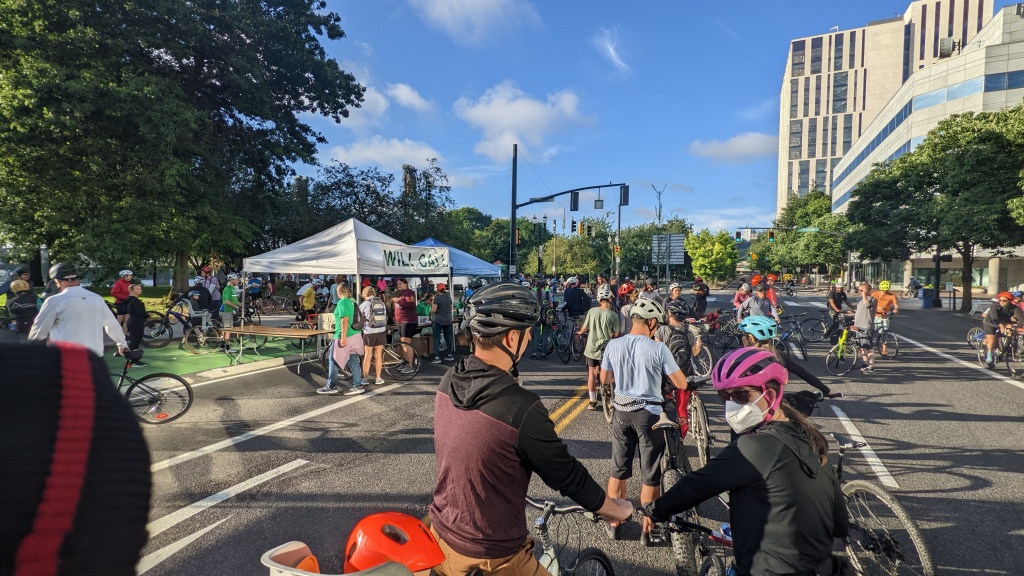
Lining up for Will-Call Registration
I arrived early and picked up our registration cards. I noticed a TV film crew interviewing a family and some kids. I stepped up and informed the cameraman that my 90-year-old mom was arriving soon to ride. Once she showed up, they approached her and talked about 5 to 10 minutes (mom has never shied away from a microphone! I fully expect she’ll be featured on KGW’s news tonight).
Update: KGW featured mom in a story you can view and read here.
Mom interviewed by a KGW news crew before the start of the race
We chose the “Family Ride,” a 13-mile course that crossed six of Portland’s bridges. In order, they were: Morrison, Ross Island, Hawthorne, Marquam, Fremont, and Steel. Although I had a map, I opted to use a mnemonic device to remember the order: MR. Hawthorne Makes Free Steel. There were plenty of volunteers, police officers, and traffic cones set up to make the course easy to follow, but I always had a ready answer when asked, “What’s the next bridge?” and, “How many more do we have to go?”
Lynn and mom climbing the Marquam Bridge
I don’t know how many cyclists there were, but there had to be thousands. On the steep climbs (especially ascending the Fremont and Marquam bridges), many dismounted to walk their bikes. With so many cyclists, including many children and infrequent riders, some people were unfamiliar with riding etiquette. Massive, slow-moving crowds formed and prevented anyone from riding certain stretches.
Crowds amass atop the Marquam Bridge
But entertainment from the Boka Marimba ensemble and aid stations passing out drinks, bananas, and cookies encouraged us to stop, enjoy a snack, and take in views normally unseen when navigating the bridges at high speed in a car.
Boka Marimba entertains the passing cyclists
Bananas seemed like a good choice at first — until I saw dropped bananas and banana peels on the roadway. Fortunately, most people were walking their bikes around those areas, so I didn’t see any banana-related spills.
Climbing up the Fremont Bridge
Along the course, I waved and shouted out thanks to the volunteers and police officers. I couldn’t help but occasionally point at Mom and proudly shout out, “that’s my mom, and she’s 90 years old!” That always got a whoop of encouragement and amazement.
Mom still looks chipper and fresh as we climb the 5th of 6 bridges
I frequently checked in with mom to see if she was hot or cold, thirsty, or needed a break, but she was fine. The forced breaks during the bicycle traffic jams seemed to suffice.
She commented she always sees things she’s never seen before when out on a bike ride with Lynn. That’s true. It is lovely to be able to peer off the sides of the bridges and take in the beauty of the Willamette River and surrounding areas.
Being both out of shape and limited to a single gear I expected to struggle. But I managed to keep going, continuing to pedal past many as they walked their bikes up hills. I stopped mostly when I lost sight of Lynn and mom. I tried to stay close and in front of them to ensure they had a clear path.
Lynn and mom cross the finish line
We finished feeling elated and still energetic enough to bike a bit longer before packing it in. We rode 4-5 miles along the Eastbank Esplanade and near OMSI before finally heading back to Lynn’s parked van.
Mom and Lynn on completion of the ride
We found a Thai restaurant and devoured a big lunch before saying our farewells.
Thai food for the victorious athletes
I still had to get home to Aloha, but my body was pretty spent. My odometer read a mere 26 miles, but in the shape I was in, even small upward inclines were by now pretty taxing. So I caught a bus and the MAX light rail and was carried to within a mile of my home.
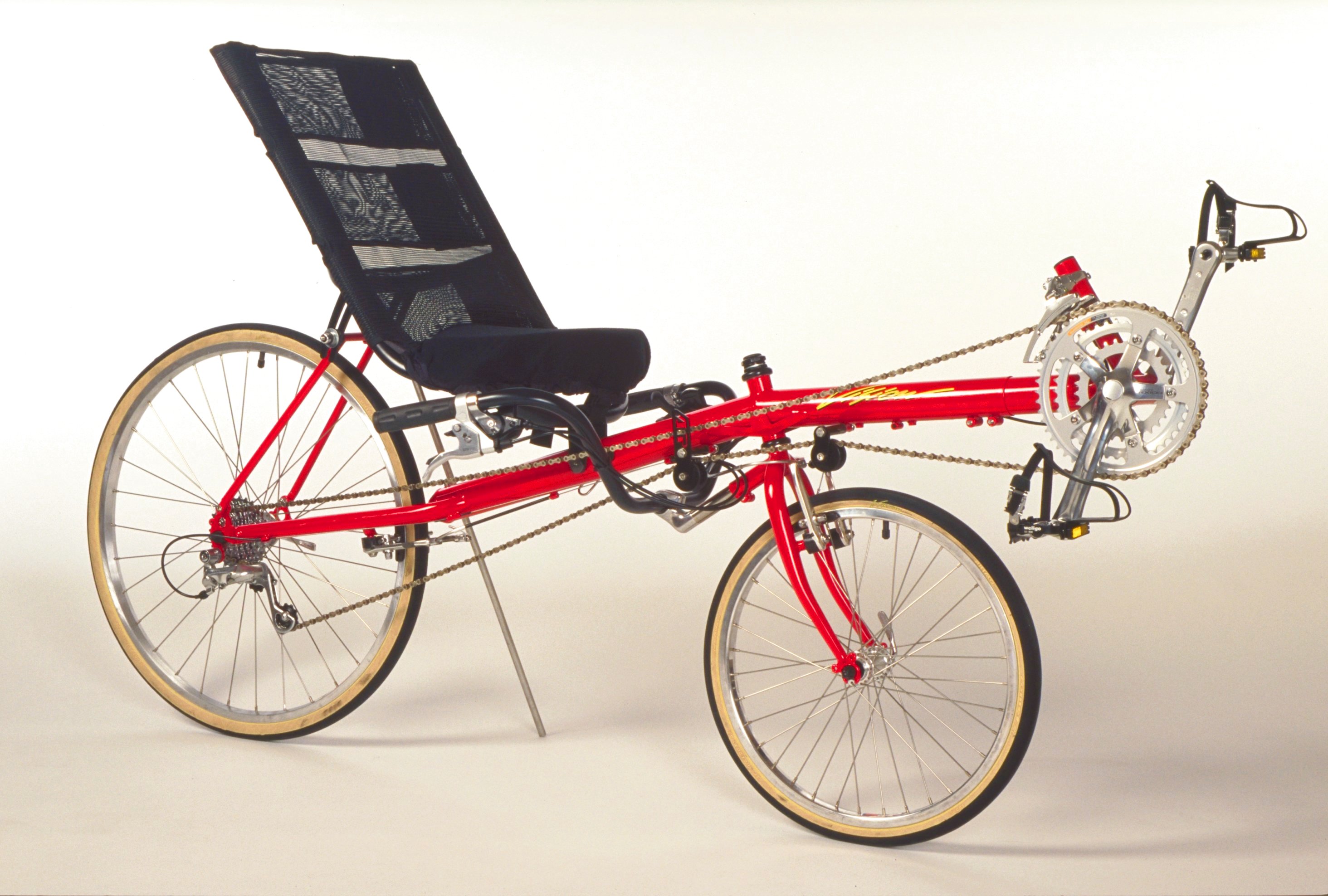
Now clean and downing water, I am enjoying the familiar ache of muscles long underused. As I feel my saddle sores and stiff neck, I recall and miss my Vision R40 recumbent bicycle that was so fun and comfortable to ride.
But the biggest feeling I have is one of pride in myself and for my 90-year-old mother and what we have experienced and accomplished today.
I am grieving. A very dear friend of mine has died. Death is an inevitability — none of us gets out of this life alive. But even though my friend’s death was not unexpected, it still is hitting me hard. I struggle between gratitude for their friendship, the sweet memories, and the fact they are no longer suffering … versus my deep sorrow that they are no longer here, and the great void that their absence leaves behind in the lives and hearts of those who love them.
As I feel what I am feeling, I have also been looking into grief, how to help those who are grieving, and what researchers and therapists have to say. I want to share some resources I found helpful.
People struggle with how to help family and friends who are grieving. They want to help, but they don’t know what to say or do. Often they are paralyzed and end up doing or saying nothing.
I heard this helpful podcast two years ago on the topic and I re-listened to it this morning.
When in doubt, say something. It can be as simple as, “I hear you and I am sorry that you are hurting.”
Avoid saying, “let me know how I can help.” Instead, anticipate concrete tangible things they might need and offer them.
When all else fails, find some human moment just to share; let them know we are here and available.
Dr. Joanne Cacciatore
Dr. Joanne Cacciatore is professor at Arizona State University who specializes in grief, traumatic death, and grief counselling. I listened to a couple guided meditations of hers on grief using the Calm app and found them helpful. I wanted to learn more about her.
She is the founder of the MISS Foundation, devoted to families who have experienced the death of a child. She also founded the Selah Carefarm, a 10-acre farm where rescued animals are cared for, and where bereaved family members give and receive connection, compassion, and understanding.
There is no pill. There is no fix. There is no cure to this kind of trauma, to this kind of grief. The only thing we can do is to create space so that the love eventually reinhabits that space – alongside the grief. There is no annihilation of the grief. There’s no extinction of the grief.
Dr. Joanne Cacciatore
If you are experiencing grief, know you are not alone. Share your grief and seek the help and love of others. Read, watch, or listen to Dr. Cacciatore.
If you know someone who is grieving, consider heeding the advice given by the How To! podcast above.
To commemorate the 80th anniversary of the signing of Executive Order 9066, mom and I will be giving another presentation on JA Incarceration during WWII. Here are the details:
Event: Japanese American Incarceration in CA & OR: My Mother’s Experience with Toby Loftus ‘90
This talk is open to the public and you do not need to be affiliated with Brown University to register. On the registration form simply enter “NA” for “Year of Graduation.”
For those who attended or watched the recording of our last presentation (or any previous presentations), I intend to speak about different topics during this upcoming talk. There are so many historical facts, quotes, and family anecdotes that I will be able to pick from and that have been omitted from other talks.
As before, mom will connect in for questions and answers. She’s 89 y.o. but still going strong. She was a 4th-6th grader when she and her family were incarcerated.
1/1/2022 Update: You can now register for my talk on the Take PART webpage!
I have been invited by Take PART to speak about my mother’s family experience being unjustly incarcerated (along with 120,000 others) during World War II. The free talk will be online using Zoom. During my talk I will be showing family pictures, providing historical context, and sharing video clips of my mother from various talks she has given in the past. At the end I will invite questions and discussion. I sincerely and warmly invite you and everyone you know to join online live.
Here are the details: When: Thursday, January 20, 2022, 7pm Pacific Time Where: Online Zoom Meeting Cost: Free (register by clicking here)
If you are unable to attend, a recording will be made available at a later point (but I really hope you can join live!).
Uncle Gene, Uncle Itsuo, Grandma, and mom at Heart Mountain Relocation Center, circa 1944
Take PART is the Portland Anti-Racism Team, a group whose mission is to confront racism and engage in dismantling the systems that continue racial inequality.
Summary: Challenging two examples, a novel and a psychological experiment, normally unquestioned in their conclusion that humans tend naturally to be cruel.
During the last month or two I was active on Facebook, I posted about my dislike of William Golding’s 1951 novel, Lord of the Flies, the book I read in school as well as the 1963 film. I compared it with a real-life story where a group of 6 boys, aged 13-16, were marooned for more than a year on an islet south of Tonga.
Here’s what I originally wrote on social media:
I remember reading William Golding’s 1951 novel, _Lord of the Flies_ in school and watching the 1963 film. I remember being horrified by the depths of cruelty and savagery to which the boys in the story descend.
I don’t remember anyone seriously questioning whether the darkness described in the book would be realized in real life. After all, there is no shortage of bad news, bad behavior, cruelty, and violence in the world.
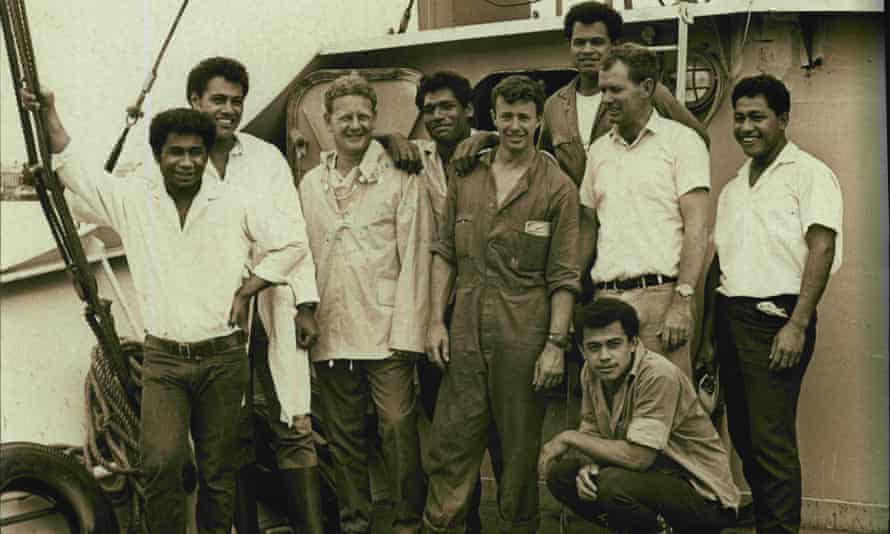
Believe it or not, there is a real-life example. In 1965, six boarding schoolboys, ages 13 to 16, were marooned on a desert island for fifteen months. They had long been given up for dead and their families held funerals.
Did they descend into the violence and cruelty described in Golding’s novel? No. They took care of each other (including one who broke his leg), tended a garden, made a makeshift gym and badminton court, constructed a musical instrument, and kept a permanent fire burning for more than a year (in stark contrast to the fights over fire-tending in Golding’s novel).
Peter Warner, the Australian captain who first discovered the boys wrote in his memoirs:
“Life has taught me a great deal, including the lesson that you should always look for what is good and positive in people.”
My Facebook Post from May, 2020
Mr. Peter Warner, third from left, with his crew in 1968, including the survivors from ‘Ata. Photograph: Fairfax Media Archives/via Getty Images
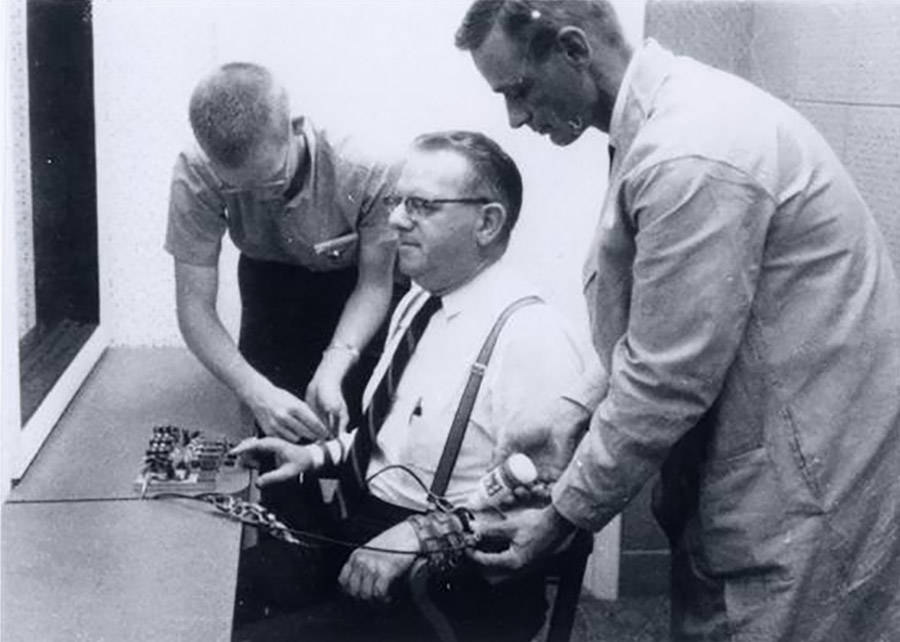
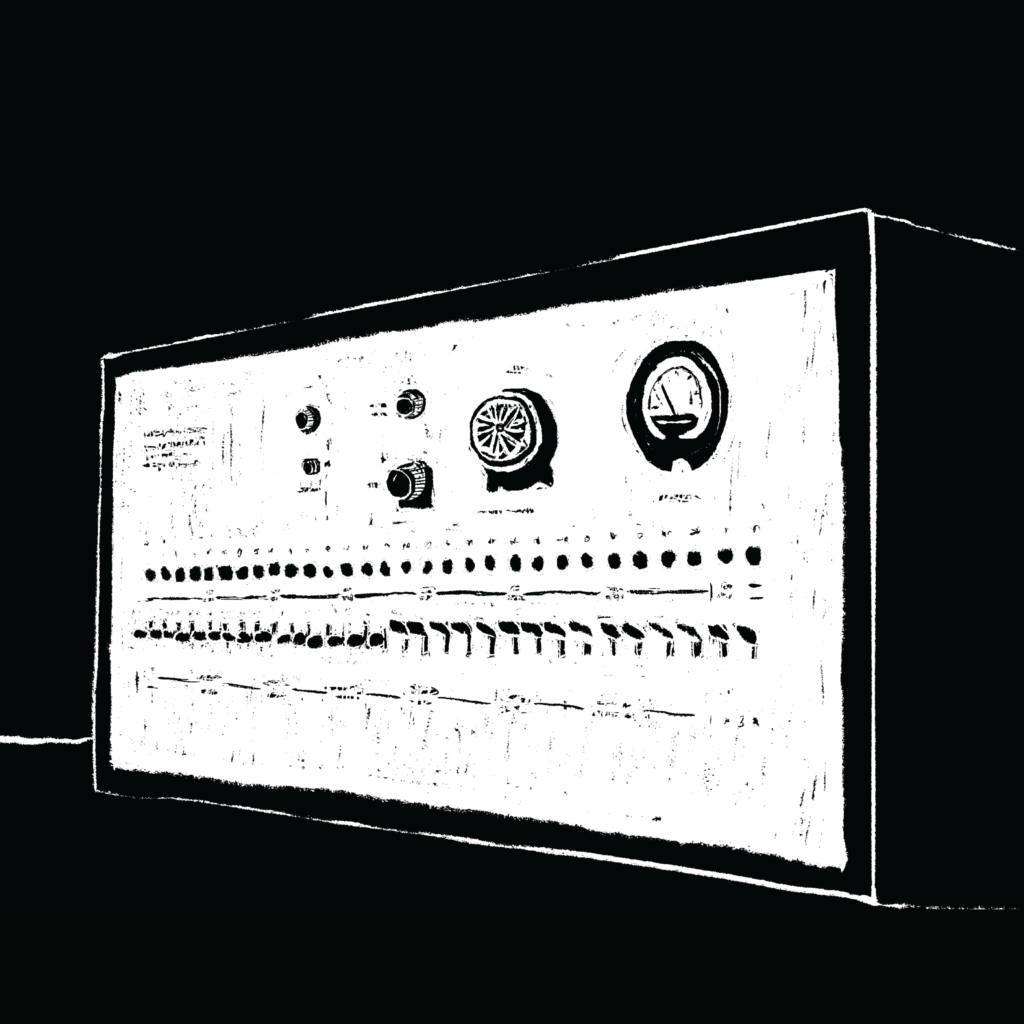
In it, subjects (called “teachers”) were directed to deliver shocks of gradually increasing levels of power to someone in another room (called “learners”) every time the learner made a mistake on a simple memory test.
Testers could not observe the learners, but they could hear the shouts and screams of pain and begging for mercy (which were performed by trained participants; in fact, no one was being shocked or injured).
If the tester hesitated or refused to administer a shock, the experimenter was supposed to give these verbal prods in order:
Please continue or Please go on.
The experiment requires that you continue.
It is absolutely essential that you continue.
You have no other choice; you must go on.
If the tester refused to continue after Prod 1, then Prod 2 was supposed to be given. If the tester refused after all four prods had been spoken, the test was halted.
The finding trumpeted by the experiment was that 65% of the “teachers” administered shocks all the way up to the fatal top 450-volt shock and everyone administered shocks of at least 300 volts.
The conclusion was that people are, in general, very susceptible to directions given by authority figures. Milgram drew parallels between his findings and the comments of Nazi war criminal Adolf Eichmann who claimed innocence and that he was only following orders.
There is a need to draw a line between the leaders responsible and the people like me forced to serve as mere instruments in the hands of the leaders … I was not a responsible leader, and as such do not feel myself guilty.
Adolf Eichman in a letter to Israeli President Yitzhak Ben-Zvi in 1962
Like Lord of the Flies, the Milgram experiment’s disturbing conclusions are presented as awful truths about the dark weaknesses in human morality.
Gina Perry
However, Gina Perry, in her book Behind the Shock Machine (The New Press, 2013), went back to scrutinize the experiment. She found inconsistencies in how the tests were administered, and much more variability in the results.
The 65% claim was from one test of only 40 subjects; other tests had far lower percentages. She also found examples in which the administrators did not follow the strict guidelines (e.g. issuing more “prods” than the four outlined above). And when the test was administered outside the hallowed halls of Yale University at a smaller college, testers were far less willing to administer shocks.
I plan to purchase and read Perry’s book. I recommend you listen to the Criminal podcast to hear Perry talk about her work and some of the interesting facts she uncovered researching her book.
Golding’s novel and the Milgram Experiment both speak to the darkness within the human psyche and the cruelty into which people may naturally descend. No doubt such darkness exists in us all.
Yet the story of the Tongan castaways and Perry’s book, though less sensational, provide instructive alternatives to the assumption that cruelty and selfishness are our natural and inevitable states of being.








 Blatant Calm