Tag Archives: classical music

2. A Chance, Once-In-A-Lifetime Musical Moment

Summary: Chance timing leads to an amazing, unforgettable moment of music and email.

The weather the last week we were in Portugal was especially rainy and windy.

Duoro River rising uncomfortably close to the level of the banks

In fact, the Duoro River separating Porto from Gaia flooded its banks the last day we were there. We saw the rising river the night before. But on our last day the winds and driving rain kept us close to our hotel, so we didn’t see the flooding firsthand.

Annie wanted to brave the elements to visit the Santa Clara Church (Igreja de Santa Clara) which was just a 6-minute walk from our hotel. It was supposed to be a spectacular Baroque style cathedral.

The wind blew hard and turned my sturdy umbrella inside out at one point, but we made it.

Upon entering we were told that visiting hours were just now closing due to a concert. Well, could we attend the concert? Yes, for €5 each. We paid and entered a cathedral entirely gilded from floor to ceiling. It was breathtaking. 

Interior of the spectacular Santa Clara Cathedral in Porto, Portugal

The organ was playing and an unseen ethereal soprano voice was heard singing a lamentation. The sound emanated from the choir loft.

After the song was finished, a woman invited us up the stairs to a room where nuns had gathered and sung, unseen, during prior centuries. The front of the room had a large window into the cathedral. A gilded wooden grid prevented those in the cathedral below to see into the room.

Nun’s sanctuary above and behind the main cathedral; organ case visible to the right

A wooden box the size of a large wardrobe housed the organ keyboard, and our guide, who turned out to be the organist/choir director told us about the music (composed by an 18th century Portuguese composer) the organ, etc. She addressed the assembled audience in three languages: English, Portuguese, and Spanish. 

Organist/Choir director speaking. The main cathedral is visible through the gilded grid behind her.

Two young woman stood by, and after the organist finished talking, she sat down and they performed a couple more pieces by the same composer.

After the concert, the organist answered questions, then invited people up to play the organ. A few visitors poked a single key here or there. I couldn’t resist. 

I quickly pulled up a simplified arrangement of Allegri’s incomparable Miserere mei, Deus on my cell phone. I stumbled slowly through it, squinting at the score on the tiny screen balanced on a rickety, 300-year-old wooden music rack. The sound of the organ was subdued and warm as the prior performance had just been for just the small room we were in.

The choir director, apparently pleased either that someone was playing an actual piece or with my musical choice (or both) leaned in close and said, “don’t be scared” — and literally pulled out the stops.

Suddenly, the sound of the great organ boomed forth filling not just our room but the entire church below. The sound felt like it was resonating in and through my body. I struggled to keep playing, self-conscious of my many mistakes and emotionally and physically shaken by the aural bombast.

I played only a page of the music before stopping. That was enough — and an actual church service was about to begin. 

We thanked the organist profusely for the opportunity (how often does one get to play an 18th century organ?). When she found out it was our honeymoon, she was effusive in wishing us happiness and was glad to have made this memorable experience part of our celebratory vacation.

Descending the stairs and exiting out into the driving rain, my hands and body continued to tremble for several minutes in the aftermath of such a physical and aural musical sensation. 

What were the chances?

Had we visited just an hour earlier, we’d have seen the spectacular church interior, taken photos, read some plaques, then left. Annie laughed when she noted that the regular admission was €4. By mere chance of timing (and €1 extra) we got this amazing and unforgettable experience. 

I would have to say this experience was, in the accurate use of the word…awesome.


  1. Introduction: Three Weeks in Portugal – A Blog Series
  2. A Chance, Once-In-A-Lifetime Musical Moment
  3. The Impact of Just a Few Words
  4. Eating Well in Portugal
  5. Drinking Well in Portugal
  6. Speaking Finnish on Madeira

The Principal of the Viola

Last weekend I played principal viola in a concert with the Oregon East Symphony (OES).

Although I have performed for over two decades with the Newport Symphony and occasionally subbed with other orchestras (such as OES), I’ve only played principal viola once before last week.

What is a Principal Musician?

The principal is the leader of a section of instruments. There is a principal cello, principal viola, principal 2nd violin, as well as principal percussion, horn, etc. The principal 1st violin is called the concert master and has additional responsibilities.

The principal leads their section. That can include assigning parts when multiple voices are written. In string sections, the principal may suggest particular bowings and fingerings. They are expected to help visually cue when the section is to start playing after a long pause in the music, and so on. Sometimes, composers may write a solo specifically for the principal musician. For this reason, the principal musician is typically the most skilled member of that section.

Accepting the Role

I knew I was not the most skilled violist in the section, and when first offered the position, encouraged them to pick someone stronger. But they insisted I was the one they wanted, so I buckled down for the task.

Rarely does the viola section get to play the melody in an orchestra. They more typically play a supporting role, offering harmony, doubling with other sections (cellos, bassoons, etc.) or the “pa pa” rhythm in a waltz “oom-pa-pa.” Once in a while, composers like Brahms and Dvořák favor the viola section with short phrases of melody. Off the top of my head, I could count on one hand the number of symphonic works I can think of that have an actual viola solo.

As luck would have it, this concert featured a rare viola solo.

The Sorcerer’s Apprentice

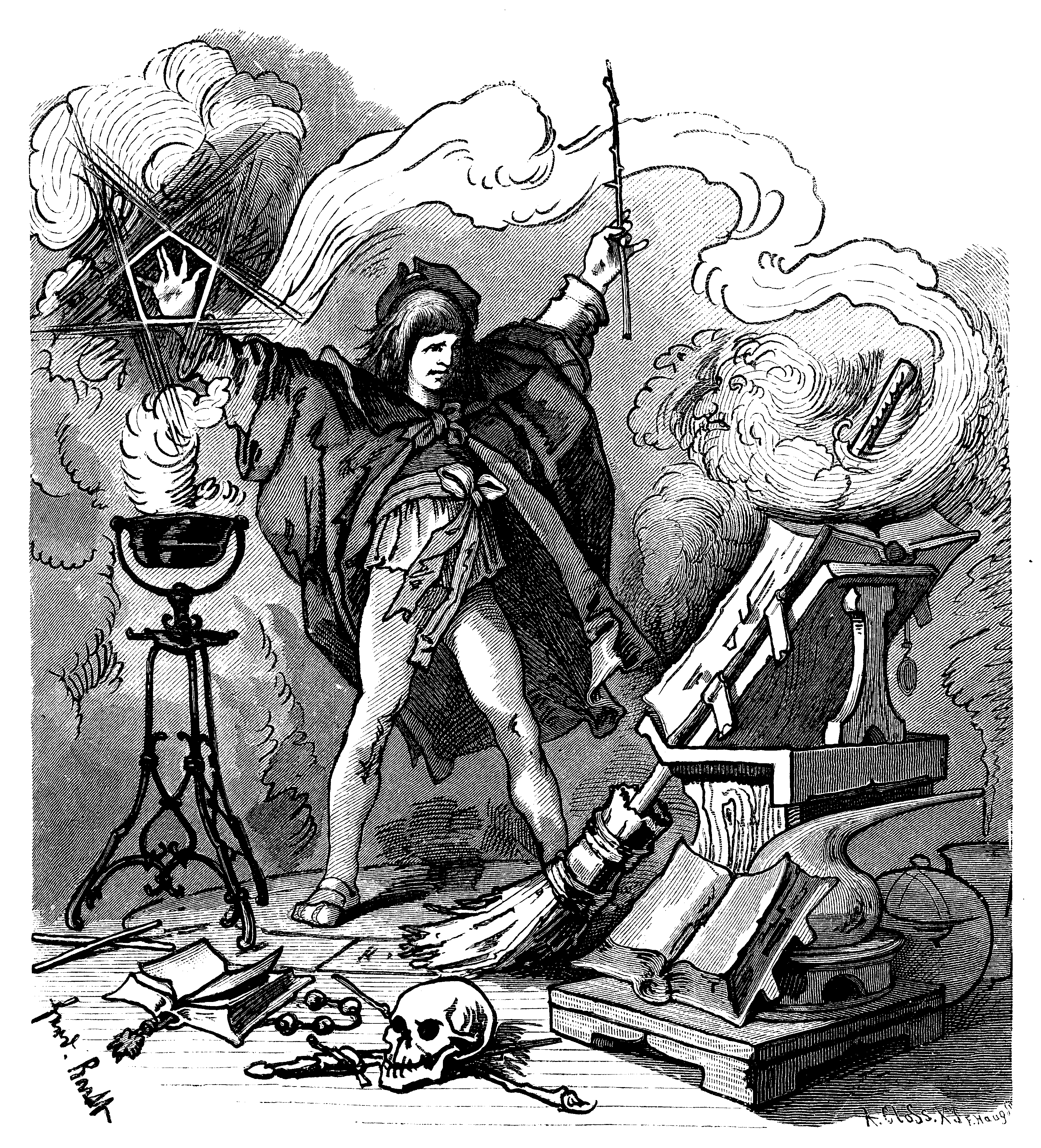
Illustration of Der Zauberlehrling. From: German book, “Goethe’s Werke”, 1882, drawing by Ferdinand Barth (Künstler) (1842–1892)

One of the pieces of the program was “The Sorcerer’s Apprentice” by Paul Dukas. Based on poem by Goethe and made popular in Walt Disney’s 1940 animated film Fantasia, it vividly depicts the story of the young sorcerer, bored and tired with his assigned of task carrying buckets of water, deciding to use magic to enchant a broom to do the work instead.

He is unable to stop the broom. He even resorts to splitting the broom with an axe only to see the individual pieces and splinters continue the work. He completely loses control of the situation and the room floods with rising water. The old sorcerer returns, and with a wave of his wand, quickly reverses the spell.

Mickey Mouse as “The Sorcerer’s Apprentice” in Disney’s Fantasia (1940)

Musically, each character in the story has a dedicated theme. The old sorcerer has an ethereal melody played by the upper strings. The enchanted broom (later brooms) has a distinctive march played by the bassoon.

After the return of the old sorcerer and his climactic spell ending the brooms’ enchantment (2:03 in the clip above), the musical theme for the old sorcerer is played (2:24), and a short, mournful melody is played on solo viola. In Disney’s Fantasia, Mickey Mouse, who plays the Sorcerer’s Apprentice returns to his mentor the magical hat while wearing a chastened and embarrassed expression (2:32). The solo viola plays its melody twice (although the second time is cut in the abbreviated Fantasia version).

Fates Collude Against Me

The week leading up to the rehearsals and concert I was alarmed to find my left ear was blocked. I tried drops to remove any ear wax, took antihistamines, and found little relief. A healthcare provider peered in my ears and perceived no infection or wax, but she did see some fluid. She recommended saline nasal rinses, nasal decongestant spray, and failing that, a nasal steroid spray (Flonase).

At first rehearsal, I could hear almost nothing out of my left ear, which is the one closest to my instrument. I couldn’t tell if I was in tune at all during the first rehearsal. It was nerve wracking!

The veritable apothecary of medications started to take effect, and as I worked through the various rehearsals, my hearing gradually improved. My friends and colleagues gave me encouragement and helpfully answered my request for feedback and advice on my solo. Come concert day, I was feeling reasonably confident.

An overdressed principal violist

I showed up in my concert tuxedo … and saw everyone was dressed in open collar black shirts. My heart sank into my stomach. Rereading an earlier email, I found the part I had missed: “For the performance, dress all in black and for comfort. Tuxedos will probably be a little too much to bear. Short sleeved shirts/sleeveless dresses are totally acceptable attire.”

Great. So, I was overdressed (and likely going to overheat).

But happily, it all worked out in the end. I was satisfied with my solo and was humbled to receive praise from several musicians and members of the audience.

Perhaps the magic of the music buoyed me in my time of need.

The Virtual Brandenburg Project

Concerts I was scheduled to play have been cancelled. Getting together with musicians to read chamber music, which is one of the things I love to do most, I cannot do.

Ten days ago, I was outside weeding my yard when my dear friend, musician and celebrated poet, Anna George Meek and I had a brief chat online. We talked about possibly trying to play music together online, and that’s when I decided I wanted to try to organize a virtual chamber group. I decided I wanted to do Bach’s Brandenburg #3.

Mind you, I’ve never tackled anything even remotely like this before.

I contacted musician friends all over the country and abroad, and within less than six hours had enough people willing to cover all 9 separate parts, some with 2 or more players per part.

Soon, videos were coming in from 6 states, and two from Germany. Every time a new video arrived I felt an excitement and joy like a little boy opening a birthday gift.

Some of these people I have not seen in years. One I have seen only once in three decades. Getting to see them and play virtually together was a heartwarming online reunion.

The project is finished, and I couldn’t be happier! Multiple musicians have been generous in their praise and gratitude for having a joyful project like this to work on while holed up in solitude.

I sincerely believe we need joy, hope, and connection during this dark time of fear and isolation. What better way than through music.

The Virtual Brandenburg Project
Virtual Brandenburg Project: Thanks for the Laughs!

I hope this project and the associated blooper video brighten your day!

Stay safe, stay sane, and stay connected…at a safe minimum distance!